Lost in the Lattice: Walking Through Jeddah’s Living Architecture
You know that feeling when a city doesn’t just surround you—but speaks to you? Jeddah did that to me. Not through words, but through walls—carved coral, sun-baked brick, and towering rawashin balconies that cast lace-like shadows on the streets below. I didn’t just visit the old quarter—I felt it breathe. This is architecture you don’t just see. You live inside it. In Al-Balad, Jeddah’s historic heart, every alleyway hums with centuries of memory, and the buildings themselves seem to lean in, whispering stories of merchants, pilgrims, and artisans. To walk here is to step into a living archive where design, climate, and culture are inseparable.
The First Glimpse: Entering Al-Balad with Fresh Eyes
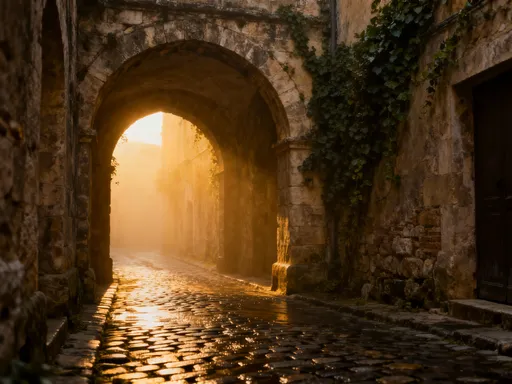
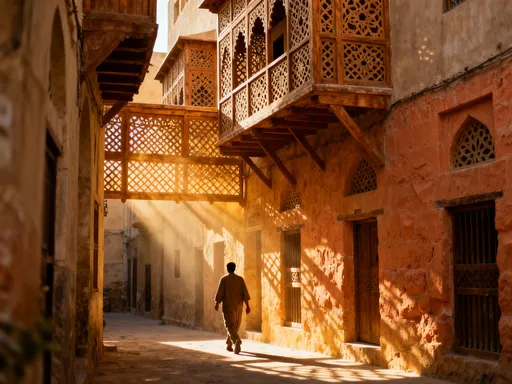
Arriving in Al-Balad, the oldest district of Jeddah, is like crossing a threshold not just in space, but in time. The transition from the modern city—its glass towers and wide boulevards—into the narrow, winding lanes of this UNESCO World Heritage site is immediate and profound. The air changes: warmer, heavier, scented faintly with sandalwood and aged timber. Sunlight filters through overhead latticework, painting shifting patterns on the ground like moving tapestries. The buildings rise tall and close, their facades made of pale coral stone that glows in the afternoon light. These are not reconstructed facsimiles; they are original structures, many dating back over 200 years, built to endure both desert heat and the salty breath of the nearby Red Sea.
What strikes visitors first is the rawashin—the intricately carved wooden balconies that project from upper floors. More than decorative elements, they are functional masterpieces of climate-responsive design. In the Hejazi architectural tradition, these latticed enclosures allow residents to observe street life while remaining unseen, honoring cultural values of privacy, especially for women. Simultaneously, they catch sea breezes and channel airflow into the interior, reducing reliance on mechanical cooling long before such technology existed. This thoughtful integration of environment and ethics is evident throughout Al-Balad, where form follows function with quiet elegance.
The use of coral stone as a primary building material speaks to the region’s resourcefulness. Harvested from the Red Sea reefs and left to harden under the sun, this natural composite is porous enough to insulate against extreme heat while remaining durable in humid coastal conditions. Combined with thick walls and high ceilings, it creates interiors that remain remarkably cool even during Jeddah’s sweltering summers. As one walks deeper into the district, the texture of the streets themselves becomes part of the experience—rough-hewn stone underfoot, hand-carved wooden doors blackened by time, and iron hinges forged by local smiths. Every surface tells a story of adaptation, resilience, and craftsmanship.
Coral Stones and Wooden Lace: The Anatomy of Hejazi Design
Hejazi architecture, the traditional building style of western Saudi Arabia, is a testament to centuries of environmental intelligence and cultural continuity. At its core lies a deep understanding of materials and microclimates. The coral stone used in Al-Balad’s homes was not merely convenient—it was ideal. Once cut from offshore reefs, blocks were left to dry in the sun for months, during which time they calcified and strengthened. Builders then layered them with a natural lime-based mortar, creating walls that not only resisted moisture but also 'breathed,' allowing internal humidity to escape while blocking external heat.
Complementing these masonry techniques are the iconic rawashin, often crafted from teak or thaghal wood imported historically via maritime trade routes from East Africa and India. These latticed screens are more than architectural flourishes; they represent a sophisticated balance between openness and seclusion. The geometric patterns—typically star-shaped or floral—permit airflow and diffused light while obscuring direct views from the outside. This design principle, akin to the mashrabiya found across the Islamic world, reflects both aesthetic refinement and social values rooted in modesty and family privacy.
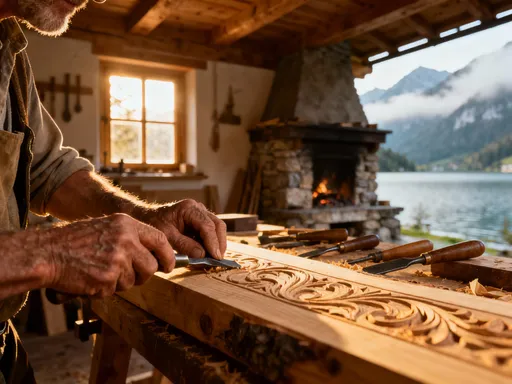
The craftsmanship involved in creating these wooden screens is extraordinary. Each rawashin is assembled without nails, relying instead on interlocking joinery that allows for slight movement due to temperature changes—a feature critical in a region of intense thermal expansion. The carvings are done by hand, passed down through generations of woodworkers who begin training in adolescence. Even today, visitors can observe artisans in Al-Balad’s quieter corners, chiseling delicate patterns into fresh timber, their tools worn smooth by decades of use. This continuity of skill ensures that restoration projects remain authentic, preserving not just buildings, but the knowledge embedded within them.
Al-Nassif House: Stepping Into a Time Capsule
Among the most celebrated landmarks in Al-Balad, Al-Nassif House stands as a powerful symbol of Jeddah’s mercantile past and architectural legacy. Built in the mid-19th century for Abdullah bin Raweha Al-Nassif, a prominent merchant whose family played a key role in regional trade, the house exemplifies the grand domestic architecture of its era. Its entrance, marked by a massive door reinforced with iron studs, opens into a central courtyard—a serene, open-air heart around which the rest of the structure is organized. This courtyard design, common in traditional Gulf homes, facilitates natural ventilation and provides a private family space shielded from public view.
Ascending the interior staircase, one encounters the layered functionality of the house. Ground floors were historically reserved for storage and business dealings, while family life unfolded on upper levels. The first-floor majlis, or reception room, features expansive rawashin overlooking the street, allowing hosts to welcome guests with comfort and dignity. The ceiling here is high, promoting air circulation, and the walls are thick, maintaining a cool interior even at midday. The craftsmanship is evident in every detail: hand-painted ceilings, intricate plasterwork, and wooden beams darkened by age and incense.
After decades of neglect, Al-Nassif House underwent meticulous restoration in the early 21st century, led by Saudi heritage authorities in collaboration with international conservation experts. The project prioritized authenticity—original materials were reused wherever possible, and traditional techniques were employed to repair damaged sections. Today, the house serves as a cultural venue, hosting exhibitions, lectures, and community events. It is not a museum frozen in time, but a living space that continues to engage with the present while honoring its past. For visitors, walking through its halls is akin to reading a three-dimensional history book, where every beam, screen, and stone conveys a chapter of Jeddah’s evolution.
Modern Jeddah, Ancient Roots: Where Tradition Meets the New
While Al-Balad preserves Jeddah’s historical identity, the city’s skyline reveals a dynamic dialogue between heritage and modernity. Towering high-rises with facades inspired by Islamic geometry rise alongside centuries-old coral buildings, creating a visual narrative of continuity and innovation. This synthesis is not accidental; it reflects a growing national emphasis on cultural authenticity in urban development. Architects today are increasingly drawing from traditional motifs—not as mere decoration, but as functional design principles rooted in climate resilience and spiritual symbolism.
One of the most striking examples of this integration is the Hajj Terminal at King Abdulaziz International Airport. Designed to accommodate millions of pilgrims annually, the terminal features a vast canopy of white Teflon-coated fiberglass membranes, arranged in a pattern reminiscent of Bedouin tents. This design is not only symbolic—it provides practical benefits, offering shade and promoting natural airflow in a region where temperatures regularly exceed 40°C (104°F). The terminal’s layout encourages ease of movement and communal gathering, echoing the social values embedded in traditional architecture. In 1983, it received the Aga Khan Award for Architecture, recognizing its successful fusion of cultural relevance and engineering excellence.
Elsewhere in the city, new residential and commercial developments incorporate elements such as shaded walkways, wind towers, and lattice screens inspired by rawashin. These features do more than evoke nostalgia—they reduce energy consumption and enhance comfort in an era of climate challenges. The city’s architectural evolution demonstrates that progress need not erase history. Instead, by reinterpreting traditional wisdom through contemporary technology, Jeddah is crafting a built environment that is both forward-looking and deeply rooted.
Walking the Heritage Trail: A Day Immersed in the Details
To truly understand Al-Balad, one must move slowly. There are no grand plazas or monumental gates—its beauty lies in the accumulation of details. A full day spent wandering its alleys reveals a rhythm of life shaped by centuries of design intelligence. Begin at dawn, when the heat has not yet risen and the streets are quiet. The first light catches the edges of coral walls, turning them golden. Listen to the soft creak of wooden shutters opening, the distant call to prayer echoing off stone facades.
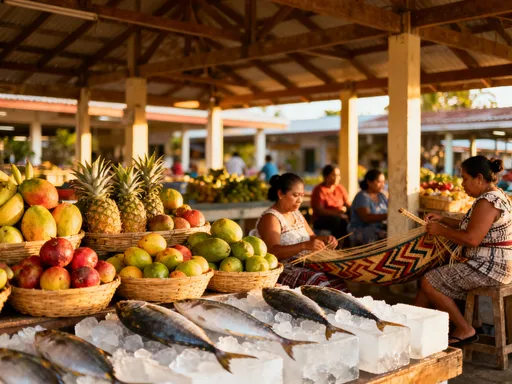
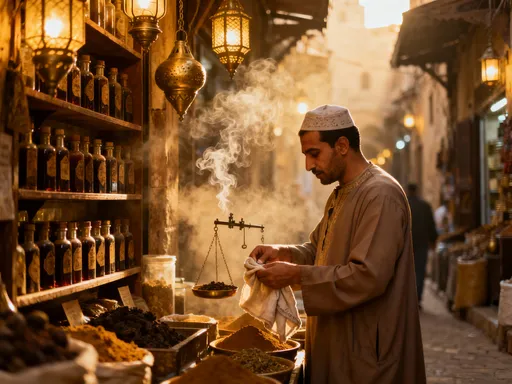
Follow the shaded pathways that weave through the district, many of them part of officially designated heritage trails. These routes guide visitors past restored homes, historic mosques, and old market lanes where spice vendors still display saffron and cardamom in woven baskets. Pause at a doorway carved with floral motifs—run your fingers over the grooves shaped by hands long gone. In some courtyards, elderly residents sip gahwa (Arabian coffee) in the morning shade, their presence a quiet reminder that Al-Balad is not a relic, but a living neighborhood.
By midday, seek refuge in one of the larger restored houses, where the temperature remains refreshingly cool. Observe how sunlight filters through the rawashin, casting lace-like patterns on the floor that shift with the hour. Smell the faint trace of oud or amber lingering in the air—resin burned for generations to perfume homes and welcome guests. In the afternoon, visit a working carpentry shop where artisans restore wooden screens using hand tools. Watch as a craftsman fits delicate pieces together, his movements precise and unhurried. This slowness—of construction, of experience, of perception—is central to Al-Balad’s essence.
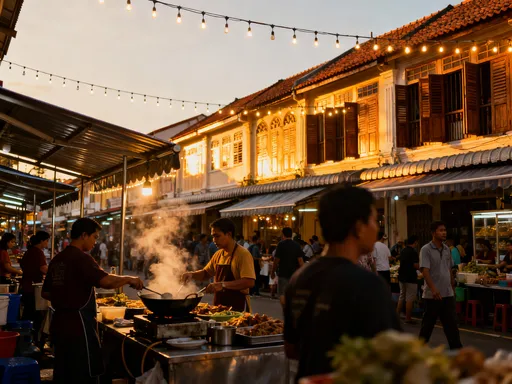
As evening falls, the district takes on a different character. Strings of soft lights illuminate certain facades, highlighting the texture of coral stone and the intricacy of woodwork. Families gather in courtyards, children playing beneath archways, elders sharing stories. To walk here at dusk is to witness architecture not as a static backdrop, but as a framework for daily life—a space shaped by people, and in turn shaping them.
The People Behind the Walls: Craftsmen Keeping History Alive
Beneath the beauty of Al-Balad’s buildings is a living network of artisans dedicated to their preservation. These are not museum conservators in lab coats, but master craftsmen—stonemasons, woodcarvers, plasterers—whose skills have been honed over lifetimes and passed from parent to child. Their workshops, often tucked into old storerooms or family homes, are filled with the sounds of chisels, saws, and sanding blocks. Here, tradition is not studied—it is practiced.
Woodcarving, in particular, remains a vital craft. Each rawashin requires hundreds of hours to complete, with artisans using templates handed down for generations. The patterns—geometric stars, floral vines, or abstract interlacing—must be symmetrical and structurally sound. Mistakes are costly, not just in time, but in material, as quality teak is now rare and expensive. Yet, despite these challenges, there is a resurgence of interest among younger apprentices, supported by government initiatives and cultural organizations that recognize the urgency of safeguarding these skills.
Similarly, coral stone masonry is experiencing a revival. While modern construction has largely shifted to concrete, restoration projects in Al-Balad require original materials and techniques. Masons relearn ancient methods of cutting, laying, and finishing coral blocks, often working in extreme heat with minimal equipment. Their work is physically demanding, but deeply respected within the community. UNESCO’s designation of Al-Balad as a World Heritage site in 1987 has helped elevate the status of these crafts, bringing international attention and funding to training programs and apprenticeships.
Local initiatives, such as the Jeddah Historical District Program, have further strengthened this ecosystem by creating job opportunities in restoration, tourism, and cultural education. Women, too, are increasingly involved—not as laborers, but as designers, historians, and tour guides—contributing to a broader narrative of heritage that includes diverse voices. These efforts ensure that preservation is not just about saving old buildings, but about sustaining a way of life.
Why This Matters: Architecture as Identity, Not Just Aesthetic
The buildings of Al-Balad are more than beautiful—they are acts of memory. They embody centuries of adaptation to climate, trade, faith, and family life. To preserve them is not an exercise in nostalgia, but a commitment to cultural continuity. In an age of globalized architecture—where cities risk becoming indistinguishable due to uniform glass towers—Jeddah’s dedication to its architectural heritage offers a powerful alternative. It reminds us that identity is not only carried in language or clothing, but in the very walls we build.
Architecture shapes how we live, how we gather, and how we relate to our environment. The rawashin teach us about balance—between openness and privacy, between beauty and utility. The coral stone walls remind us of resourcefulness, of building with what the land and sea provide. The courtyards speak of family, of shared space and quiet reflection. These are not abstract values—they are embedded in brick and beam, accessible to anyone willing to look closely.
For travelers, especially those seeking meaningful experiences beyond surface-level tourism, Jeddah offers a rare invitation: to engage with a city not as a checklist of sights, but as a conversation across centuries. It asks us to slow down, to touch, to listen, to feel. In doing so, we do not merely visit a place—we connect with its soul. And in that connection, we find a deeper understanding of what it means to belong, to remember, and to build for the future without forgetting the past.
Jeddah’s architecture is not frozen in time. It breathes, evolves, and endures. To walk through Al-Balad is to walk through a living story—one written in coral and wood, shadow and light, silence and memory. It does not shout. It whispers. And if you listen, it will tell you something true about home.