Beyond the Monasteries: Hidden Corners of Thimphu That Stole My Heart
Nestled in the misty Himalayas, Thimphu isn’t just Bhutan’s capital—it’s a quiet rebel, blending tradition with subtle surprises. Most travelers rush to monasteries, but I found magic in the overlooked: alleyway murals, morning markets, and silent streets where prayer flags whisper secrets. This is Thimphu beyond the guidebooks—authentic, unhurried, and deeply alive. Let me take you where maps don’t.
The Pulse of a Different Thimphu
Thimphu moves to a rhythm all its own—one that defies the expectations of a national capital. There are no traffic lights, yet the flow of cars, cyclists, and pedestrians feels instinctive, almost choreographed. The city’s skyline remains low, dotted with chortens and prayer flags rather than skyscrapers, a testament to Bhutan’s commitment to preserving its cultural and environmental balance. Unlike bustling capitals elsewhere, Thimphu does not shout; it murmurs, inviting those who listen closely to discover its quiet pulse.
What sets Thimphu apart is not its size or infrastructure, but its ability to hold modernity gently within ancient traditions. Government offices operate with efficiency, yet meetings often begin with a moment of silence or a shared cup of suja (butter tea). Shops display smartphones beside prayer beads. This is not contradiction, but harmony—a city that evolves without losing its soul. For travelers, shifting focus from the well-trodden path of monasteries to the everyday moments of urban life reveals a more intimate, human side of Bhutan.
Walking through Thimphu’s central lanes, one senses a deep respect for order, not imposed by rules, but born of collective mindfulness. The absence of billboards, the clean streets, the unhurried pace—all reflect a society that values well-being over speed. To experience Thimphu fully is to slow down, to notice how tradition isn’t performed here, but lived. It’s in the way a shopkeeper spins a nearby prayer wheel while unlocking his store, or how schoolchildren bow slightly when passing a chorten. These are not gestures for tourists; they are the quiet rhythm of daily life.
Morning at the Centenary Farmers’ Market
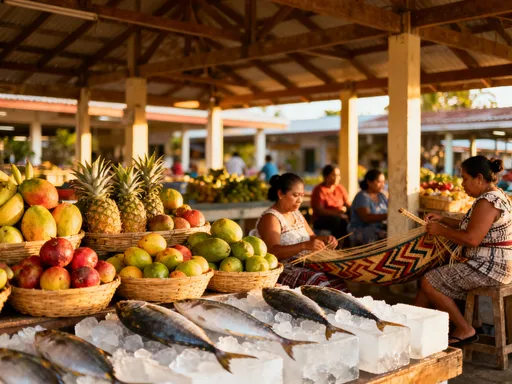
If Thimphu has a heartbeat, it beats strongest at the Centenary Farmers’ Market. Long before the sun clears the eastern ridges, farmers from remote valleys arrive with baskets of fresh produce, their faces lined by wind and sun. This is not a tourist market, but a living marketplace where the city feeds itself. The air is thick with the scent of ripe ara berries, wild herbs, and stacks of fiery red chili peppers that seem to glow against the morning light.
Rows of wooden stalls burst with color: golden pumpkins, deep purple eggplants, bunches of wild ferns, and baskets of red rice still fragrant with earth. Vendors in traditional kiras—handwoven dresses secured at the shoulders—call out prices softly, their voices blending with the clatter of baskets and the occasional bark of a stray dog. Bargaining happens gently, with smiles and nods, never urgency. This is commerce infused with community, where a sale is often preceded by a question about family or the weather.
The market is also a cultural archive. Heirloom seeds passed down for generations are sold alongside medicinal plants known only to local healers. Here, one might find *shamu*, a rare mountain vegetable, or *datsi*, the pungent cow-and-yak cheese that forms the base of Bhutan’s beloved dish, *ema datsi*. For visitors, tasting is encouraged—but respectfully. Sample a slice of ripe pear offered with a smile, or sip warm ara juice from a clay cup, but always ask before photographing people or their goods.
To experience the market at its most vibrant, arrive between 7:00 and 9:00 a.m. By mid-morning, the energy begins to shift as vendors pack up. Wear comfortable shoes, carry small bills, and bring a cloth bag—plastic is discouraged in Bhutan, and reusable bags are a small but meaningful gesture of respect. Let yourself wander without a list; the market rewards curiosity. You may leave with more than groceries—you may leave with a memory of connection.
Street Art with a Soul: Murals That Speak
Turn a corner off Thimphu’s main road, and you might find yourself face to face with a thousand-eyed deity painted in vivid mineral hues on a concrete wall. These are not random graffiti, but devotional murals—modern expressions of ancient spiritual art. Scattered through alleyways and side streets, they transform the city into an open-air temple, where every commute can become a moment of reflection.
Rooted in thangka painting traditions, these murals depict deities like Chenrezig (the Buddha of compassion), wrathful protectors, sacred mandalas, and mythical creatures such as the garuda and snow lion. Each brushstroke carries intention: eyes are painted last, believed to bring the image to life. Unlike gallery art, these works are not meant for admiration alone—they are offerings, created to bless the neighborhood and remind passersby of impermanence and compassion.
The most striking murals can be found along the path leading to Motithang Takin Preserve, near small temples and residential lanes. Some cover entire building facades, their intricate patterns glowing in the afternoon sun. Others are tucked above doorways, visible only to those who look up. Locals often pause before them, clasping hands in silent prayer or lighting a butter lamp nearby. There is a quiet pride in these works—not boastful, but deeply rooted in cultural continuity.
For visitors, these murals offer a rare intimacy with Bhutanese spirituality outside formal monastic settings. They invite stillness. Stand before a mural of Guru Rinpoche emerging from a lotus, and the city’s hum fades. You are not just seeing art—you are witnessing devotion made visible. Photography is permitted, but always with humility. Avoid touching the paintings, and never point your feet toward them when seated nearby—a sign of deep respect in Bhutanese culture.
The Quiet Charm of Residential Lane Walks
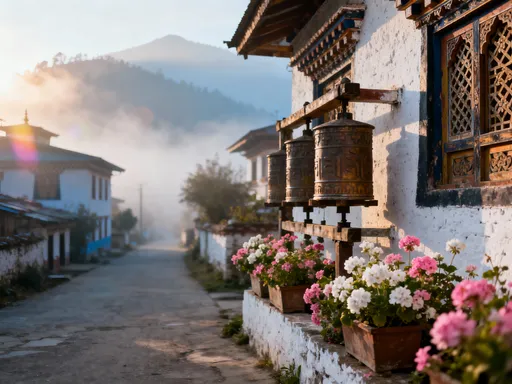
To know Thimphu, walk its residential lanes. Just beyond the bustle of Norzin Lam, the city’s main thoroughfare, lie quiet streets where life unfolds at human scale. Here, whitewashed houses with intricately carved wooden windows line narrow roads. Prayer wheels stand beside flower boxes bursting with marigolds. Children in navy-blue school uniforms skip past, their backpacks bouncing, while elders in gho and kira turn handheld mani wheels with practiced ease.
These neighborhoods—such as Lingzhi Lam and Chubachu—offer a rare glimpse into daily Bhutanese rhythms. Laundry flutters between houses, dried chili strings hang like garlands, and the occasional cow ambles down the street, tolerated like a neighborhood elder. There are no souvenir stalls, no loudspeakers, no rush. The only sounds are the distant chime of a temple bell, the rustle of prayer flags, and the soft murmur of conversation from an open window.
One of the most rewarding walks begins near the giant Buddha Dordenma statue. From its base, follow the footpath downhill through a pine-scented trail that opens into a residential area. Along the way, you’ll pass small family shrines tucked into rock faces, butter lamps flickering inside glass cases. Locals often greet passersby with a quiet “Kuzu zangpo” (hello), their smiles warm but unassuming. This is not performance; it is genuine hospitality.
Walking these lanes teaches the value of slowness. There is no destination, no checklist. Instead, there is presence. Notice how every home has a small altar facing east, how incense smoke curls from a window at dusk, how even modern houses adhere to traditional architectural codes. These details are not enforced by tourism, but upheld by identity. For the mindful traveler, such walks become meditative—a way to absorb the city’s spirit without disturbing its peace.
Café Culture with a Bhutanese Twist
In a city where tradition runs deep, a quiet revolution brews—one served in clay cups and porcelain mugs. Thimphu’s café culture is not about replacing tradition, but reimagining it. In unassuming corners, cozy cafés offer a blend of old and new: suja (butter tea) steams beside cappuccinos, and traditional *khabzey* (puffed pastry snacks) share tables with chocolate croissants. These spaces have become quiet hubs for connection—where young professionals, artists, and students gather to read, write, and converse in both Dzongkha and English.
Many of these cafés double as cultural spaces. Some display rotating art from local painters, their walls filled with thangka-inspired pieces and contemporary interpretations of Bhutanese myths. Others maintain small bookshelves stocked with works on Bhutanese history, poetry, and environmental philosophy. Garden seating is common, with wooden benches nestled among rhododendrons and prayer flags. The atmosphere is unhurried—meant for lingering, not rushing.
What makes these cafés special is their authenticity. They are not designed for Instagram aesthetics, but for comfort and community. You won’t find loud music or flashy menus. Instead, service is quiet and attentive, often by young Bhutanese who are proud to share their culture. Order a cup of ara-infused tea, and you might be told the story of the berry’s medicinal use. Ask about the honey in your toast, and learn it was harvested from hives in the Punakha valley.
For visitors, these spaces offer a gentle way to engage with modern Bhutan. Sit quietly, listen to conversations, and let connections happen naturally. A simple “How is your day?” in halting Dzongkha can spark a warm exchange. But remember: these are not performance spaces. Avoid loud voices, intrusive photography, or treating staff as cultural exhibits. Respect the calm. In doing so, you honor the very spirit these cafés protect.
Architectural Harmony: Why Buildings Here Breathe
Thimphu’s architecture is a silent promise—one that shapes the city’s soul. Unlike capitals that surrender to concrete and glass, Thimphu enforces a unique building code: all structures, even government offices and banks, must reflect traditional Bhutanese design. Sloping wooden roofs, whitewashed walls, carved window frames, and intricate painted motifs are not optional—they are law. The result is a city that feels cohesive, calm, and deeply rooted.
Walk through the city, and you’ll notice how even modern buildings breathe with cultural memory. A pharmacy may have electric signs, but its façade echoes the form of a dzong (fortress monastery), with tiered roofs and red-brown trim. A bank’s entrance is framed by traditional motifs of the “endless knot” and “vase of abundance,” symbols of wisdom and prosperity. This is not imitation, but integration—a way of ensuring that progress does not erase identity.
The philosophy behind this code is part of Bhutan’s broader commitment to Gross National Happiness. Architecture is seen not just as shelter, but as a reflection of values—harmony, balance, and respect for nature. Materials are often locally sourced, and designs consider sunlight, wind, and seasonal changes. Even in winter, when fog wraps the city, the warm tones of wood and stone create a sense of shelter and continuity.
For visitors, this architectural consistency offers a rare visual peace. There are no jarring contrasts, no eyesores. Instead, the city unfolds like a hand-drawn map—gentle, intentional, and human-scaled. It invites you to look closer: at the way a window frame mimics a lotus petal, or how a roof’s curve echoes the surrounding hills. In a world of chaotic urban growth, Thimphu stands as a quiet example of how cities can grow without losing their heart.
How to Experience Thimphu Like a Local (Without Trying Too Hard)
Experiencing Thimphu like a local doesn’t require fluency in Dzongkha or a decade of meditation practice. It begins with presence. Arrive early in the morning, when the city is still soft with mist and the markets are waking. Dress modestly—shoulders and knees covered—as a sign of respect in a deeply traditional society. Carry a reusable water bottle; Bhutan banned single-use plastic in 1999, and visitors are encouraged to follow suit.
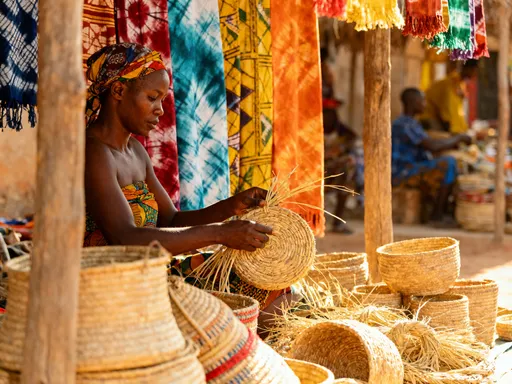
Learn a few phrases: “Kuzu zangpo” (hello), “Tashi delek” (blessings and good fortune), “Tenchi la” (thank you). Even mispronounced, they open doors. But more important than words is silence. Stand still. Watch. Listen. Let the city reveal itself in moments: a monk cycling downhill with a loaf of bread, a woman weaving a basket by her doorway, the soft chime of a bell from a hidden temple.
Avoid treating Thimphu as a checklist. You need not visit every museum or monument. Instead, choose one neighborhood and return to it each day. Sit on a bench. Drink tea. Let familiarity grow. When you do explore, go on foot. The city is small enough to navigate without taxis, and walking allows you to notice what machines miss—the scent of juniper burning in a courtyard, the laughter of children behind a garden wall.
Resist the urge to photograph everything. Some moments are meant to be held in memory, not on a screen. Ask permission before taking photos of people, and never intrude on private spaces or religious rituals. Above all, move slowly. Let your pace match the city’s. In Thimphu, depth is found not in distance traveled, but in attention paid.
Conclusion: Finding the Unseen in Plain Sight
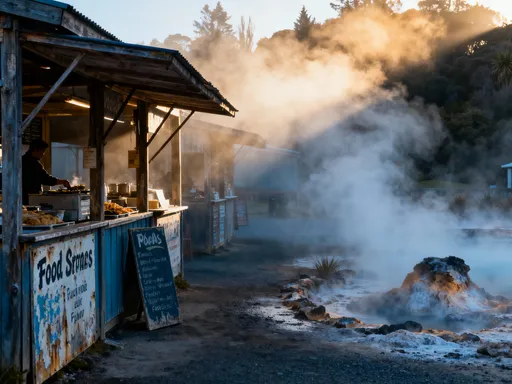
Thimphu’s true beauty is not in its grandest monuments, but in its quietest details. It is in the steam rising from a roadside *momos* vendor at dawn, in the way sunlight gilds a chorten at dusk, in the soft clink of a butter lamp being lit behind a window. It is in the unspoken understanding that life here is not rushed, but lived with intention.
To visit Thimphu is to be reminded that wonder does not always announce itself. It waits—in alleyway murals, in the hum of the morning market, in the silent turn of a prayer wheel. It asks only that we slow down, look closely, and stay long enough to listen.
So let go of the need to see everything. Instead, let the city unfold around you. Let a single moment—a shared smile, a drifting prayer flag, the scent of incense on the wind—become your entire journey. In Thimphu, simplicity is not lack. It is depth. And in its quiet corners, you may find not just a destination, but a way of being.